Inquiry / Distributors

Batch inspection using multiple cameras
[RICOH SC-20 internal case study]

This is a case study of a single SC-20 unit inspecting multiple images captures by cameras set at different directions.
This was achieved by utilizing a HDMI device that generates multiple images, and a display to be used as an inspection object.

This example shows SC-20 being applied to inspect a three-dimensional object, which is usually difficult to inspect solely with SC-20, by combining a variety of additional devices.
Inspection Method

SC-20 is basically a product that inspects assembly objects by directly capturing images with a camera mounted inside the main unit.
However, since there are no limits to the objects that can be captured by the camera, as long as the image difference is recognizable, it is also possible to inspect the display of visualized images.

Utilizing this property, a system was constructed to inspect images captured from multiple cameras at various angles, being displayed on multiple LCD monitor, using the SC-20's “shape” matching mode.

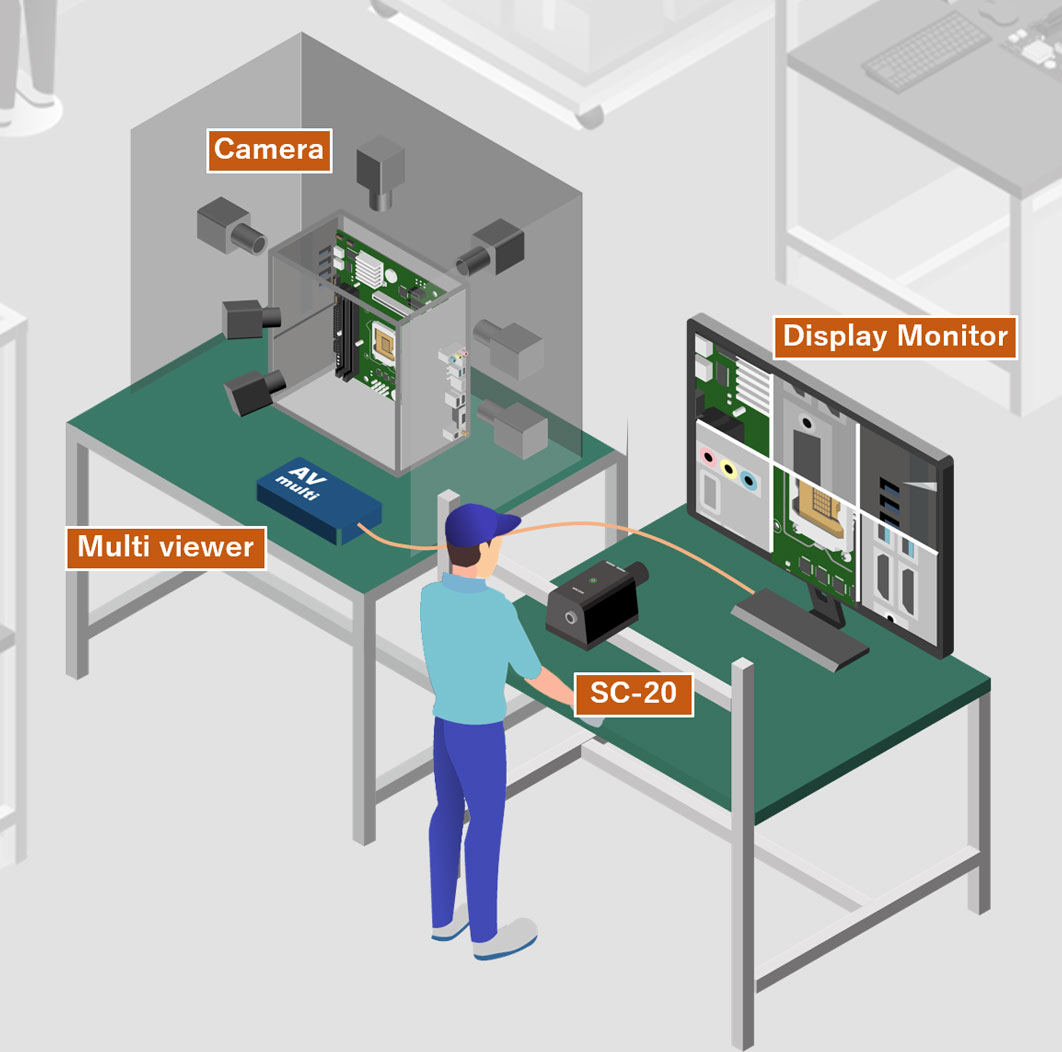
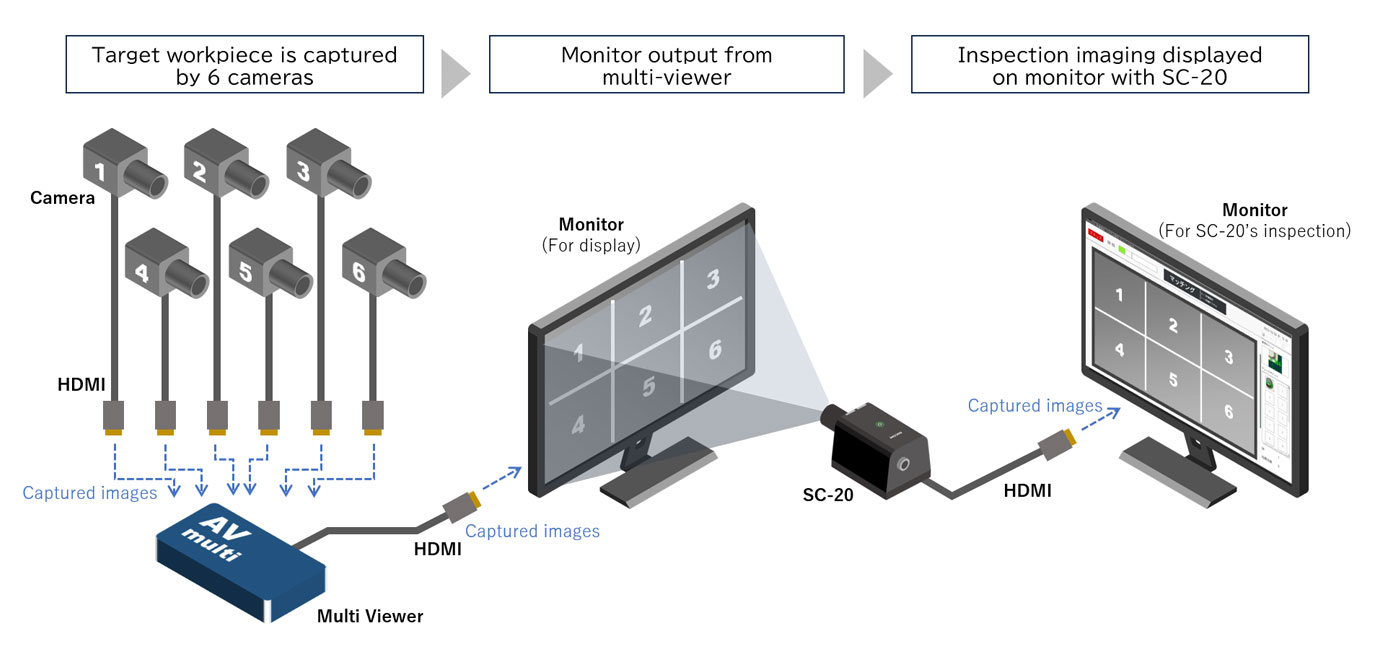
  • Six cameras were installed to capture images of multiple parts of the product to be inspected, from various angles.
  • The HDMI signals from each camera were collected and displayed on a separately prepared LCD monitor via a device that generates multiple images (HDMI multi-viewer).
  • SC-20 was set up to capture images of the LCD monitor display, by installing the image of the product in its completed state as a master image. The rest of the setup was the same as a normal inspection setting.
Image of batch inspection using multiple cameras and monitors
Connection Conceptual Diagram
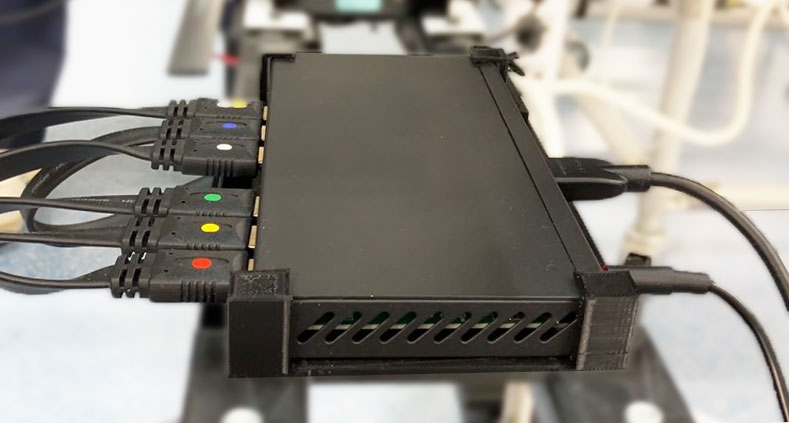
Video relay equipment used for multiple display(HDMI Multi viewer)

Effects after the Installation

Issues before the installation

  • Since it is difficult for the SC-20 to inspect three-dimensional objects, which can only be inspected from one direction, the inspection was done manually.
  • While it may be possible to inspect the products by switching the angle toward SC-20, heavy products have a large load and a high risk of misalignment.

The frequency of inspection omissions increased due to the multiple check points, and the company felt that there was a limit to the manual inspection method.

Improvements made after the installation

  • Multiple inspection points can now be inspected in one step after setting the product at a fixed position.
  • The inspection errors that occurred with manual inspections are eliminated, suppressing the outflow of defective products.
  • Worker man-hours are reduced and takt time is greatly improved.

The outflow of defective products due to missed inspections is now eliminated, and a dramatic improvement in productivity has been achieved!