
Inquiry / Distributors

Linking SC-20’s Inspection to Conveyor Transport
[RICOH SC-20 internal case study]

An example of successfully reducing both takt time and man-hours by linking the product transfer process with SC-20’s inspection.
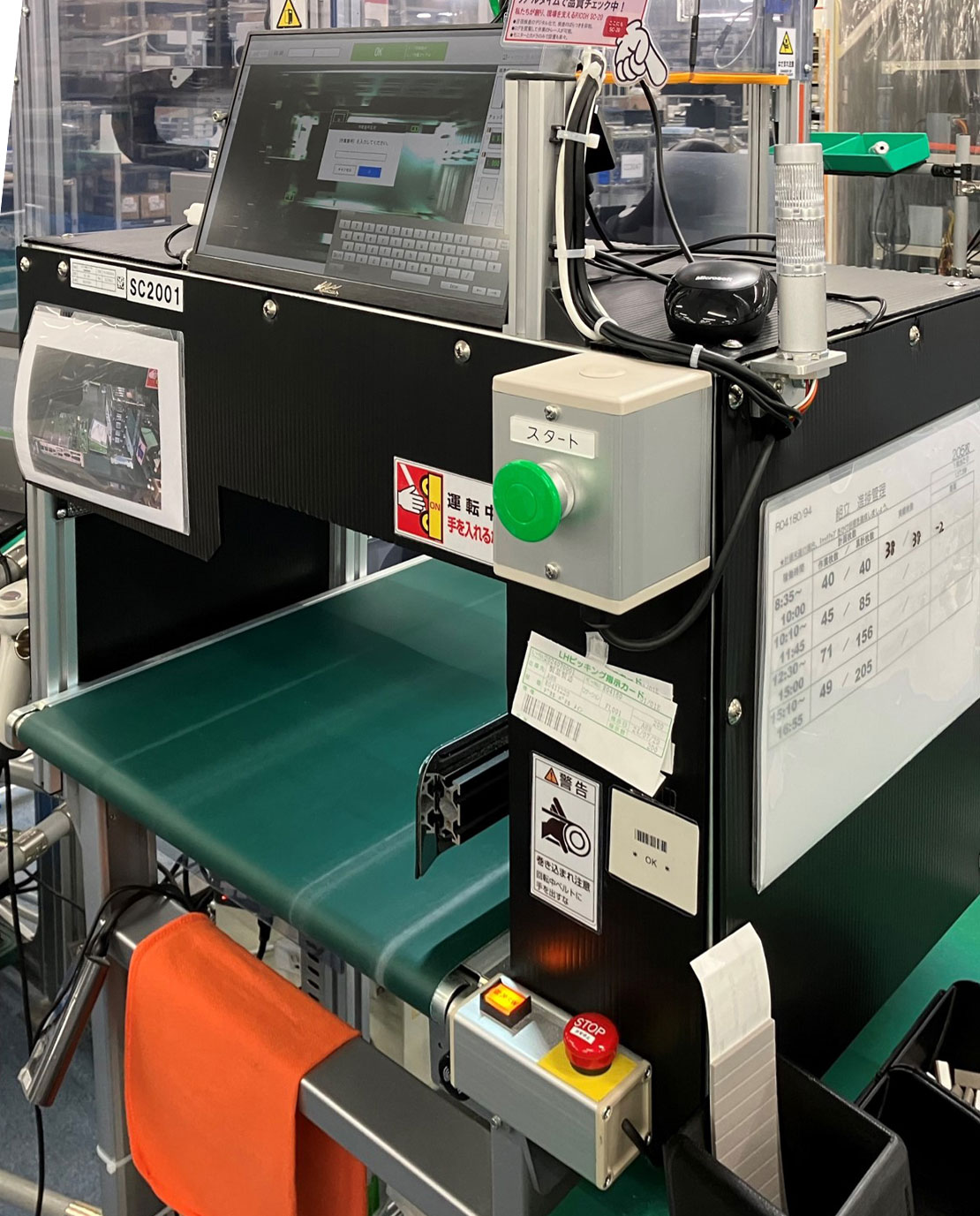
The conveyor is triggered by SC-20's inspection results, and the products are automatically transferred to the workbench in the next process, eliminating the manhour to carry around the product with a cart.

This is an example of the use of SC-20 in combination with the factory equipment, which not only automated manual inspections but also reduced unnecessary walking movements by workers.
Inspection Method

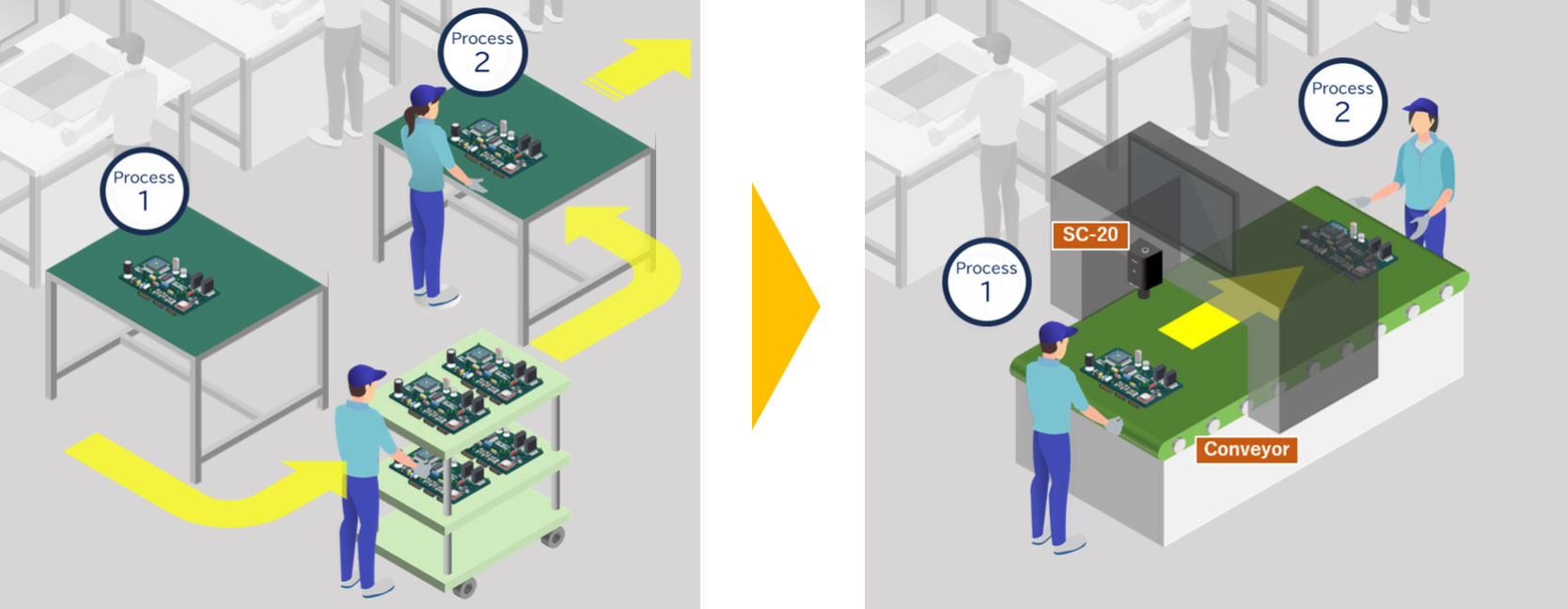
Since each worker were assigned to performed two assembly processes, the workers were required to use a cart to transport the product from the first process to the second.

In addition, since inspections were conducted manually, there were cases of omissions and missing items being transferred to the next process by accident.

By introducing SC-20 and combining it with an automatic transferring conveyor, the workers were no longer required to push the cart around, and the time loss due to the extra process could be eliminated.

  • Introducing SC-20 to the first process. Eliminated manual inspections and switched to automated inspections using SC-20's image recognition technology.
  • A control system was established so that SC-20’s OK results trigger the conveyor to move the products to the second process.
  • Each worker may perform their assigned process in the same working position without unnecessary walking.
Equipment linking SC-20’s inspection with conveyor transfer
Improvement of work by introduction of SC-20 (image)

Effects after the Installation

Issues before the installation

  • Visual inspections required much man-hours, and mounting errors and missing products were sometimes overlooked.
  • Workers had to move products from one process to the other using a cart, resulting in unnecessary walking motions and time loss.

There were issues with manual inspection leakage, heavy workload, and work efficiency.

Improvements made after the installation

  • Visual inspections were eliminated and mounting conditions were automated through SC-20, reducing worker man-hours and preventing human errors.
  • Smooth work coordination was realized through automatic transferring by eliminating unnecessary movements of the workers.

Automatic inspection reduces outflow of defective products and improves productivity by reducing man-hours and takt time!