silex technology, Inc. [RICOH SC-20 customer case study]
Achieving Zero Assembly Defects!
“Creating an Environment Where It Feels Like a Supervisor Is Always Beside Every Operator”
Reason for Installation
What led you to introduce the RICOH SC-20?
Although we continuously provide training and guidance to our operators, assembly processes have become increasingly complex as the number of assembly steps per product has grown.
You had been using the SC-10A before, correct?
Yes. The SC-10A helped us reduce defects in our assembly process. However, as we needed to inspect smaller and more detailed components, we began considering the introduction of the higher-resolution SC-20.
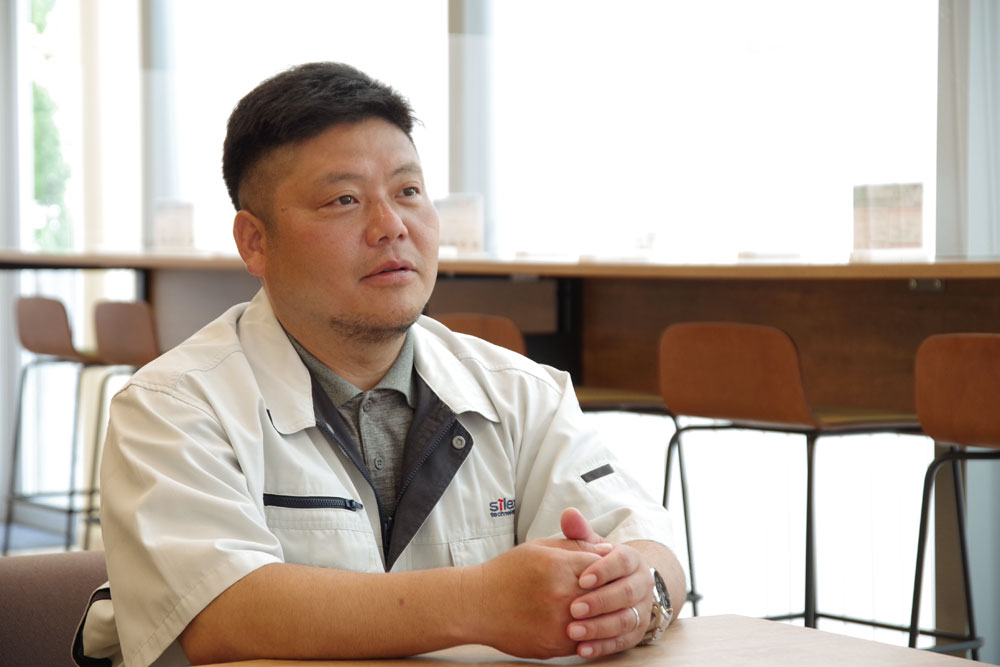
Manufacturing Center
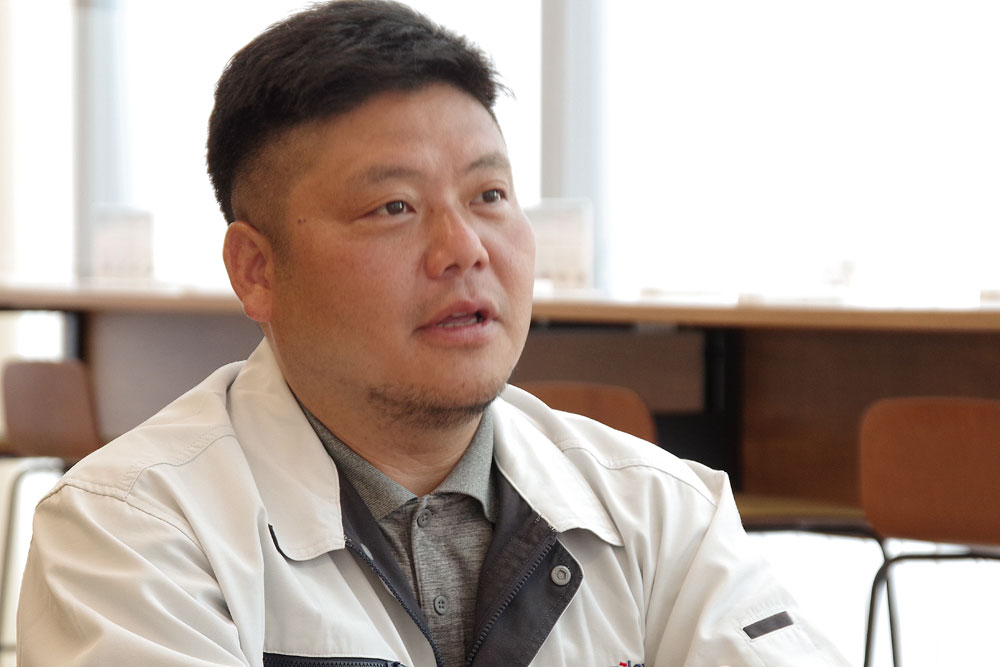
Production Department, Senior Manager
Mr. Yoshiyuki Ashida
Overview of the Implemented Process
What specific process is the SC-20 used for?
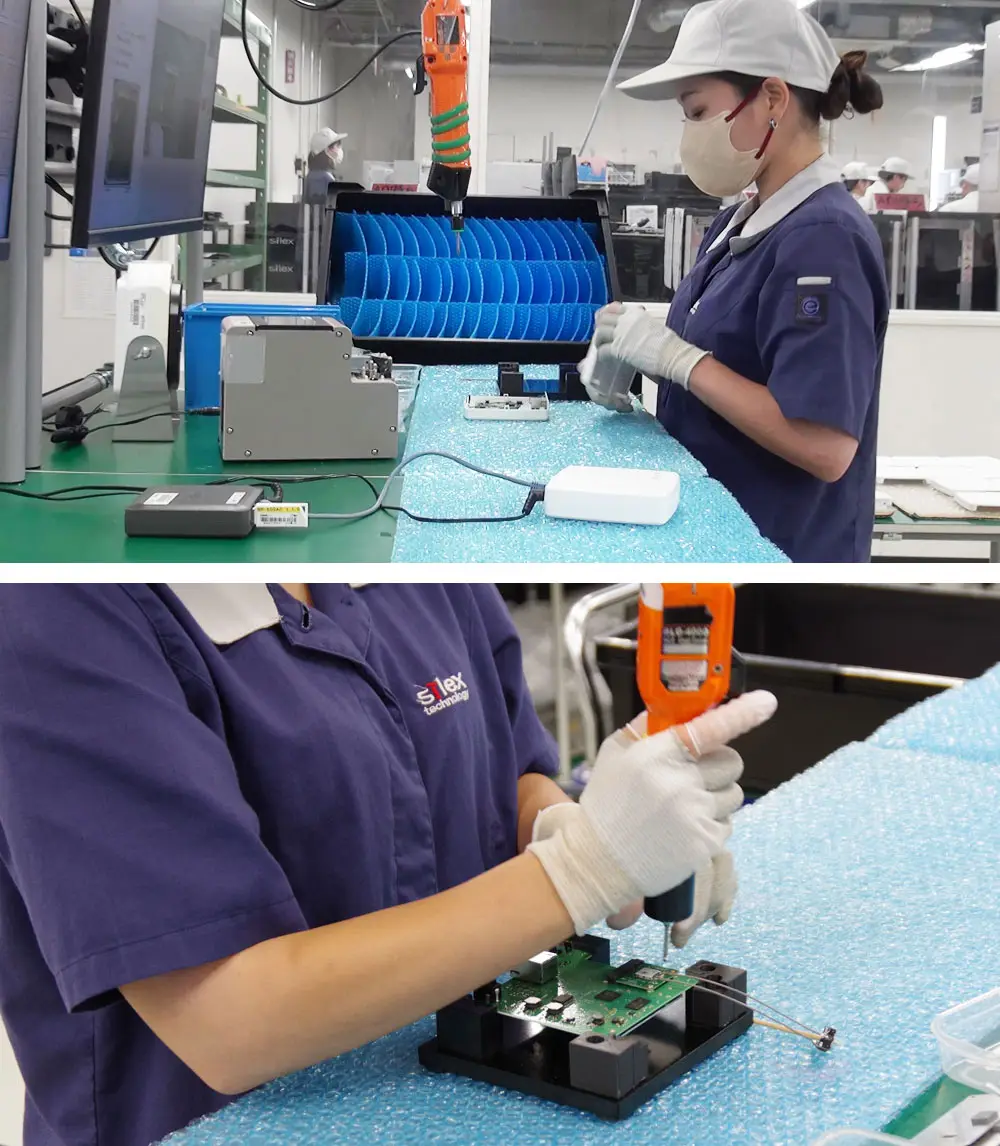
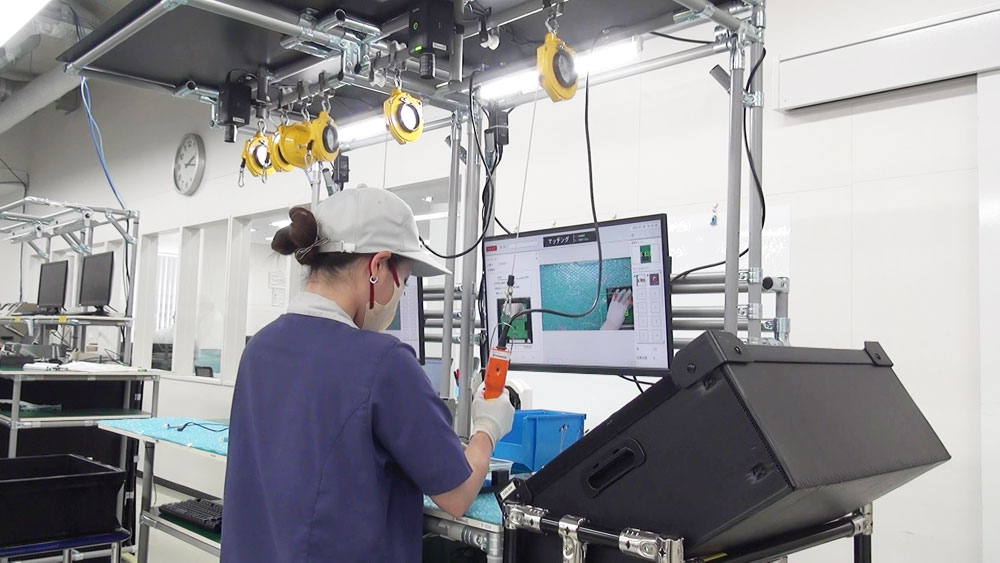
We mainly use the system in our cell production assembly processes to ensure assembly quality. It verifies that component mounting on circuit boards, screw tightening with electric screwdrivers, and part installation are performed correctly and in the proper sequence.
Which inspection functions do you use?
We select the most suitable inspection mode based on the product housing color, component shape, and assembly task, including [Shape Matching], [Color Recognition], and[ AI Screw Inspection].
In some cases, we combine multiple modes, for example, Color Recognition and Shape Matching, to inspect the same component. In particular, AI Screw Inspection has proven extremely helpful thanks to its high level of accuracy and reliability.
Effect after Installation
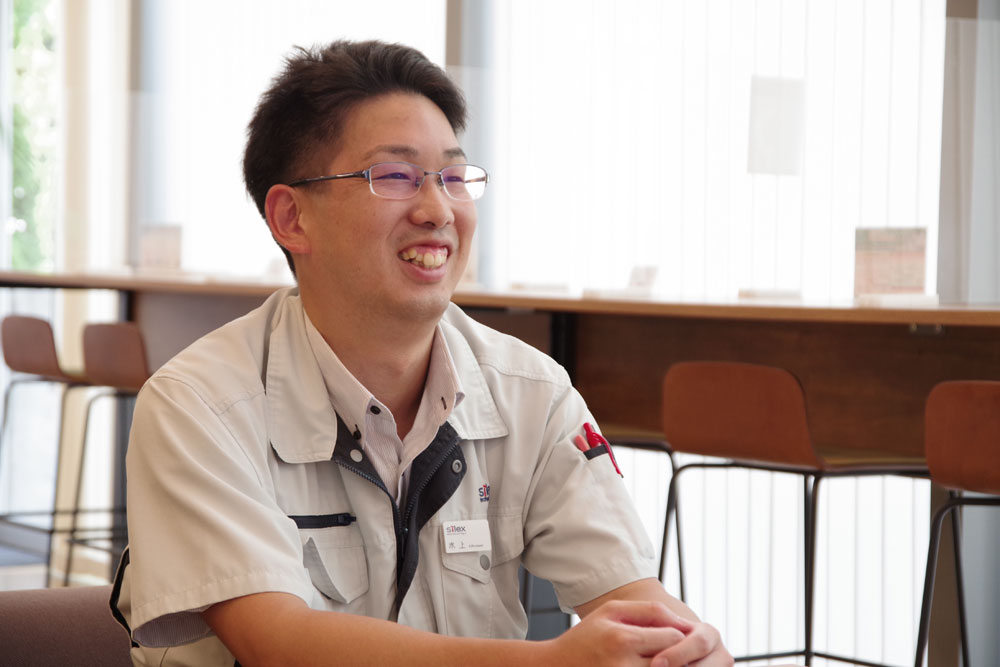
Manufacturing Center
Production Department, Production Group, Leader
Mr. Ryotaro Mizukami
What benefits have you seen from a quality control and production management perspective?
Previously, we had to rely on visual inspections, making it difficult to prevent errors completely. Double and even triple checks were often required.
With the SC-20, once the inspection thresholds are properly configured, it can achieve virtually 100% error detection. When an operator makes a mistake, it is identified immediately, helping us eliminate rework and prevent defects from moving downstream.
What benefits have you seen from a quality control and production management perspective?
In the processes where the SC-20 has been introduced, we have achieved zero assembly defects.
By letting the SC-20 handle inspections, operators can focus on their work with confidence. This has created a more reliable working environment and resulted in approximately a 10% reduction in labor hours, including setup and preparation time.
Were there any challenges or best practices you discovered during installation?
Are there any operational tips you have developed when using the SC-20?
We make sure to understand what image inspection does best and clearly define which checks should be handled by the SC-20 and which should remain the responsibility of operators.
For example, the SC-20’s [Check Mode] has allowed us to digitize records that were previously managed with paper checklists. In addition, the system displays the next work instruction, creating an environment where operators feel as if a supervisor is always by their side.
I see. Could you give us some examples of the types of work instructions that have been particularly useful?
They are especially helpful for tasks where the work content can vary from product to product.
For example, the SC-20 helps ensure quality for processes that cannot be managed through simple quantity checks, such as applying thread-locking adhesive to screws or confirming that torque wrench operations have been completed. By providing clear on-screen instructions, the SC-20 helps prevent missed steps and supports consistent quality.
Could you tell us about any challenges you faced during implementation and how you overcame them?
Since the system relies on image inspection, managing lighting conditions was one of our biggest challenges.
For example, aluminum and other reflective materials can appear differently depending on the lighting. To address this, we installed covers above the workstations to block ambient light. We also identified the inspection positions with the least reflection, which helped us achieve more stable and reliable inspections.
Another advantage is the SC-20’s [Reference Point] feature. Because the reference point is displayed on the monitor, inspections can be performed at a consistent position even without dedicated fixtures. I believe this also contributes to the high inspection accuracy.
Future Outlook
What are your plans for the future?
As manufacturing continues to evolve, we believe that greater creativity, flexibility, and environmental responsibility will be required. To achieve these goals, maintaining high levels of quality and efficiency will be essential.
Moving forward, we plan to expand the deployment of the SC-20 across all processes, creating an environment where our team members can work with confidence and peace of mind. At the same time, we remain committed to delivering products that all users can operate safely and reliably.
Customer Profile
Corporate Name
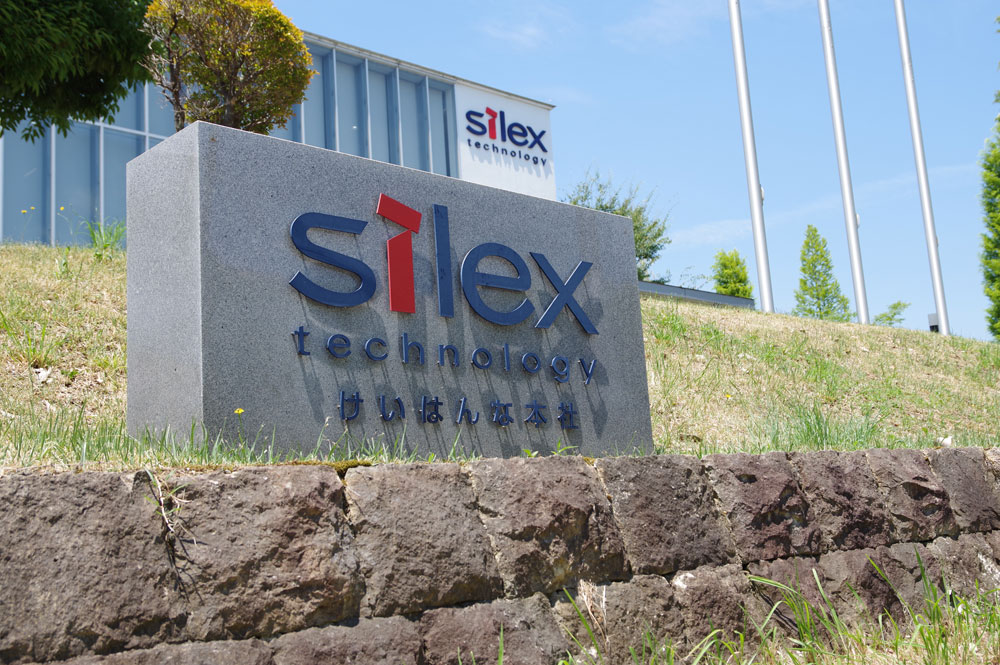
silex technology, Inc.
Head Office
2-3-1 Hikaridai, Seika-cho, Kyoto 619-0237, Japan Access Map
Founded in 1973 and headquartered in Seika, Kyoto, Silex Technology is a technology-driven manufacturer that delivers exceptional customer experiences by creating “Absolutely Must Connect wireless environments” through advanced wireless and computing technologies verified in-house. The company provides safe and highly reliable solutions to equipment manufacturers and service providers in the medical, industrial, and commercial sectors.
In 2025, silex technology, Inc. announced Japan’s first domestically manufactured AI module powered by Qualcomm® Dragonwing™, marking its full-scale entry into the edge AI market.
Commitment to Manufacturing Excellence
Driven by its commitment to “Absolutely Must Connect wireless environments”, silex technology, Inc. operates under a fully integrated business model in which design, development, manufacturing, quality assurance, and sales work together as Team silex technology.
Every team member shares the mission of ensuring reliable connectivity at all times. With an unwavering commitment to quality and reliability, the company continues to develop products that customers can trust in even the most demanding environments.